


Most of us don’t need to be yelled at like an old school football coach,
We need a different voice doing the coaching.
This Fieldwork comes straight from the article below (check it out if want)

The core idea was growth doesn’t require punishment…
but we’ve been trained to believe it does.
The goal this week isn’t to silence the harsh voice.
It’s to stop letting it be the only one in the room.
This Week’s Fieldwork
1. Catch the harsh line.
When you hear something like:
“You should be better by now.”
“What’s wrong with you?”
“If you don’t stay on yourself, you’ll fall apart.”
Pause.
Don’t argue.
Don’t correct it.
Just notice it.
Awareness is the first interruption of autopilot.
2. Run the “Would I Say This to My Kid?” test.
Quick gut check:
If your child made the same mistake…
would you say this to them at bedtime?
If the answer is no, you’ve got your signal.
That voice isn’t coaching.
It’s yelling.
3. Swap the fuel, keep the standard.
Grace doesn’t mean lowering expectations.
It means changing what powers your effort.
Replace the harsh line with one calm sentence:
“This matters, and I can try again.”
“I care about this, even if today was messy.”
“Mistakes don’t cancel effort.”
Say it once.
Then move on.
No spirals.
No speeches.
Why This Works
Pressure can produce short bursts of effort.
Grace produces courage — the kind that lets you keep showing up.
And here’s the quiet truth from the article:
Your kids are learning what growth feels like by watching how you treat yourself.
When they hear grace instead of self-attack,
they learn that mistakes mean learning — not punishment.
That’s formation, not softness.
Closing Reminder
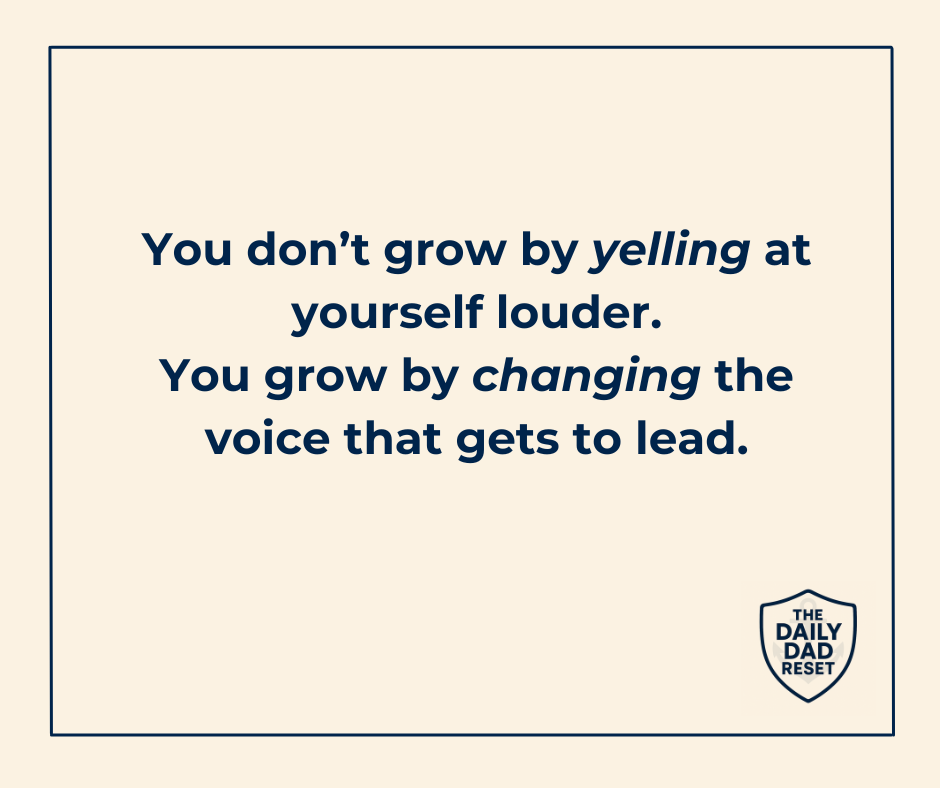
And when you do,
you’re not just resetting your life —
you’re shaping the language your kids will use when it’s their turn to try, fail, and try again.
From my experience in coaching, yelling just makes the kid that much more anxious. They start saying, "Please, don't throw it to me." We need to be encouraging so their confidence turns that into, "Please, throw it to me." Good encouraging words.