


This Fieldwork comes from this week’s article about frustration, expectations, and the moments when reality doesn’t match the picture in our head, read more about it below:

Those moments show up fast…
a Lego build that feels off,
a project that doesn’t land,
a plan that unravels.
Our instinct is usually the same: fix it. Adjust it. Make it better so everyone can move on.
But those moments aren’t just about the build. They’re about what kids learn when things don’t go as planned…
when the picture in their head collides with reality.
You know…
like how you expected to be a calm, patient, fully‑formed dad and then realized parenting is mostly improvising while tired, hungry, and emotionally invested in irrational tiny humans who lose it over Legos.
This Fieldwork won’t help you find Zen during a stressful moment or help you say something that belongs in Dead Poet Society. It’s about teaching…
quietly, consistently…
what to do when something feels frustrating, disappointing, or unfinished. Feel free to apply it to yourself, your kid, or if you dare......
your wife.
This Week’s Fieldwork
1. Name the frustration.
When your kid (or you) is clearly upset because something didn’t turn out how they pictured it, start here:
“Yeah… that’s frustrating.”
No minimizing.
No correcting.
Just name what’s real.
This helps them feel seen instead of solved. It also normalizes frustration as an acceptable emotion to feel and name
2. Name the effort.
Add one sentence that widens the moment without fixing it:
“I see how much thought you put into that.”
“You really cared about how this turned out.”
“That mattered to you.”
This is the microblessing.
It keeps the standard intact while lowering the pressure.
3. Ask the question.
Then offer choice instead of control:
“Do you want a hug, some help, or both?”
And follow their lead.
Sometimes it’s a hug.
Sometimes it’s help.
Sometimes it’s both.
What matters most is that they learn they’re not alone when things go sideways.
Why This Works
Frustration is often less about failure and more about unmet expectations. Think about every DIY project you’ve ever confidently announced would take 30 minutes… and then quietly moved into your garage like a long‑term tenant.
You planned a quick fix. Instead you made four emergency trips to the hardware store, watched two YouTube tutorials from guys named Steve who own tools you don’t recognize, convinced yourself you were “almost done” at least three times, and doom‑scrolled while sitting on an upside‑down bucket questioning your life choices.
At some point you accepted a pity hug from your kid…
who had clearly lost faith in both you and the project…
and finished the job with the quiet dignity of a man starring in a very low‑budget episode of This Old House: Suburban Despair Edition.
That’s the part we tend to skip with our kids.
When we rush to fix, we accidentally teach that discomfort should be avoided or erased as quickly as possible.
But when we stay, name effort, and offer choice, we teach something sturdier:
Frustration is part of learning
Expectations can be adjusted without giving up
Connection with dad doesn’t disappear when things don’t work the first time
Over time, those small moments become the script kids use with themselves — not just for Legos, but for school, relationships, and every moment when reality doesn’t match the picture in their head.
Closing Reminder
You don’t have to fix every hard moment.
Sometimes the most important thing you teach is what to do inside the moment…
especially when reality doesn’t match the picture in anyone’s head.
Name the frustration.
Name the effort.
Then ask the question.
Because….
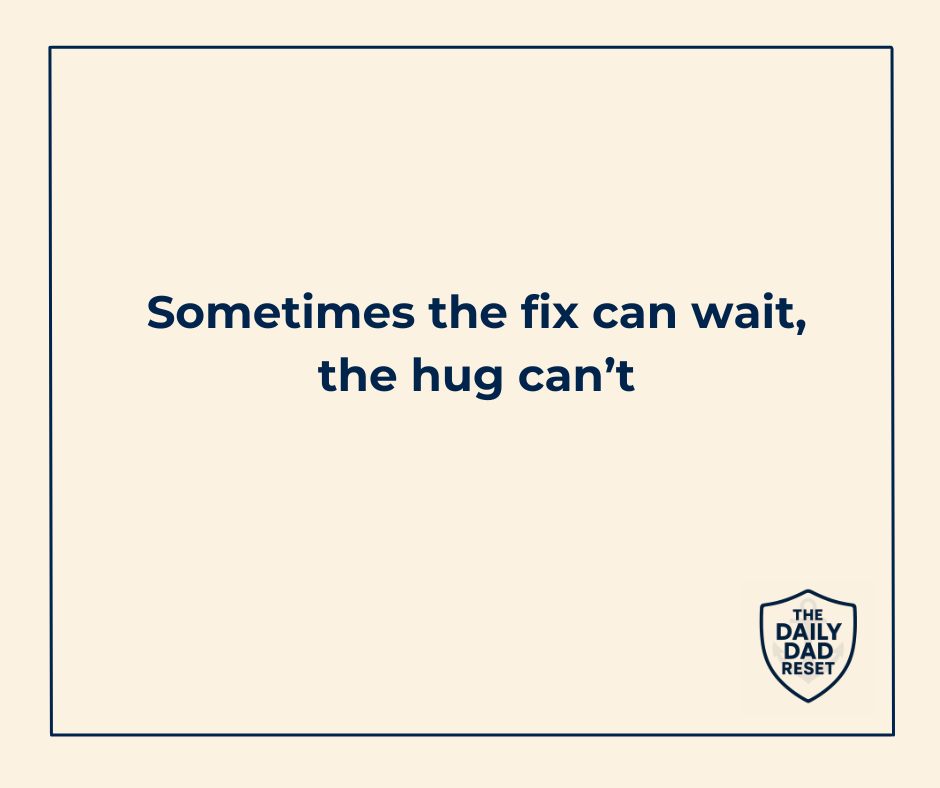
That small pause helps expectations soften instead of shatter.
And it’s often the difference between quitting the build…
or staying in the room long enough to learn something that actually lasts.
I am definitely a fixer by nature and have to remind myself constantly that is not always what is best in the moment.