


This post is the fourth in a series exploring the wonderful, chaotic, occasionally humbling world of being a dad and coaching youth sports. This series is less about elite drills, perfect mechanics, and turning nine-year-olds into MLB prospects… and more about helping kids love the game they’re playing. If you care not only about wins, but also kids having fun, building confidence, getting better, and wanting to come back next season, this series is for you. So far we’ve explored:
Let’s start with defining what a dad coach is.
Not the guy trying to make sure his kid always plays shortstop.
Not the coach treating a Tuesday night little league game like Game 7 of the World Series.
And definitely not the adult turning the ride home into a moving postgame interrogation.
A dad coach is someone trying to be a good dad and a good coach at the same time.
Because the truth is…
you know your own kid deeper than anyone else on that field. You know when they’re frustrated before they say a word. You know when confidence is slipping. You know when they need a push. And you know when baseball is starting to feel heavy.
There are moments when kids need dad coach. Moments to teach. Correct. Challenge. Support.
But there are other moments when they just need dad.
And those are the moments this article is about.
Because deep down, the real win isn’t just better players.
It’s kids who still love the game. And kids, especially your own, still wanting to ride home with you after a rough one.
Story
The game had barely ended.
Kids were still grabbing helmets.
Parents were folding chairs with the urgency of a NASCAR pit crew.
And before we even pulled out of the parking lot, I could feel it.
The temptation. The speech. The overwhelming urge to immediately revisit the strikeout, the missed ground ball, the bad throw, the baserunning mistake, and that one swing that apparently required a full ESPN breakdown. Because if I’m being honest?
The ride home can feel like the perfect coaching window.
Captive audience.
No escape.
Just you, your kid, and your emotionally charged baseball wisdom rolling 42 miles per hour through suburban streets.
And deep down, it FEELS helpful.
Like:
“I’m helping him process the game.”
Meanwhile your kid is in the backseat wondering if it’s socially acceptable to fake being asleep at 6:14 PM. Or quietly staring out the window replaying the game in their head for the fifteenth time already. Because here’s the thing adults forget...
Most kids already know when they struggled. They don’t need help identifying every mistake. They lived it. That’s actually why we made a rule in our car.
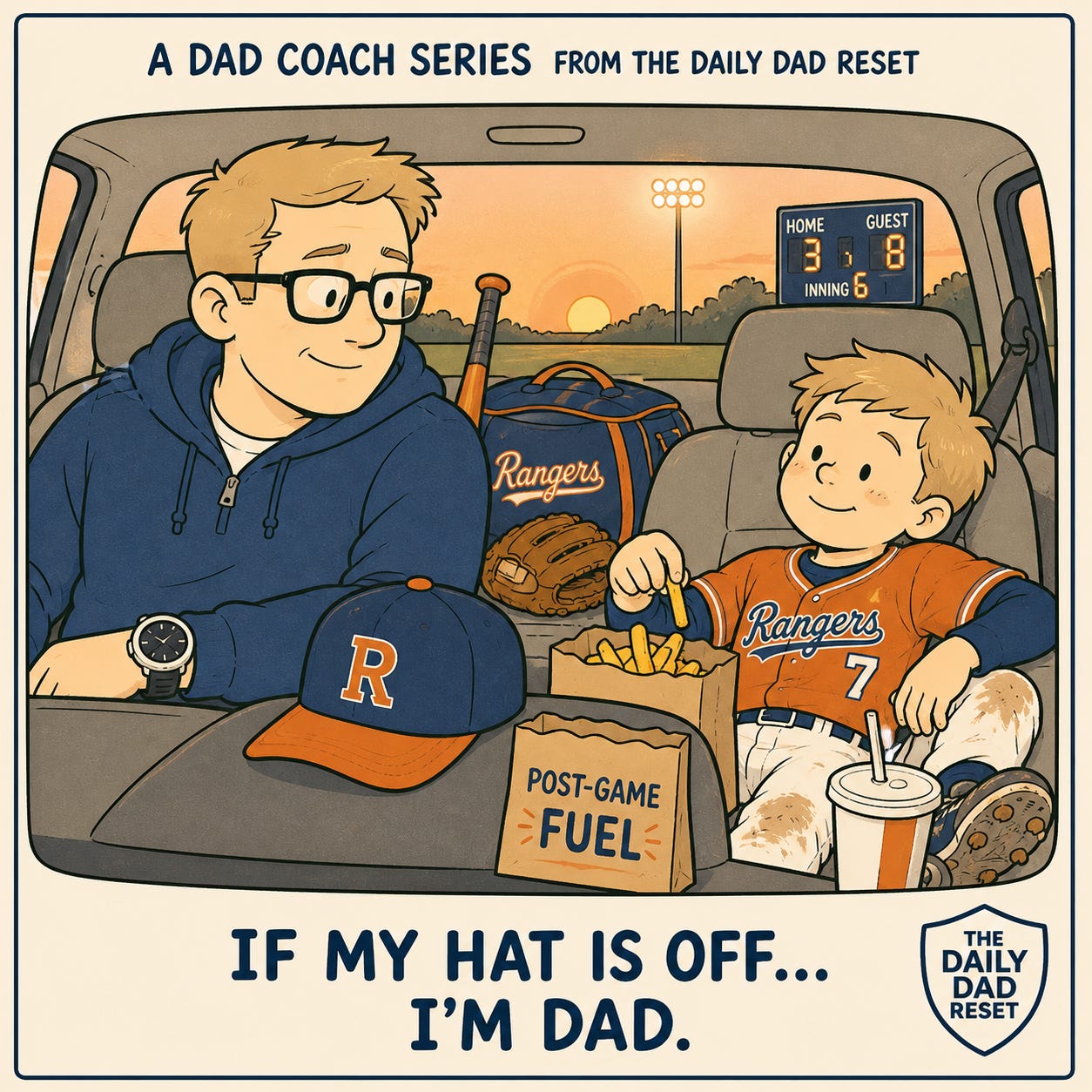
If my hat is on, I’m coach.
If my hat is off, I’m dad.
And before we leave the parking lot, I ask them:
“Who do you want riding home right now?”
Sometimes they want coach first. They want to process the game. Talk through an at-bat. Ask questions. But honestly?
Most of the time my hat ends up sitting on the dashboard before we even leave the field. And the cool thing is…
my boys will remind me if I accidentally start sounding like coach when the hat is off.
Which is both humbling…
and incredibly fair.
Insight
The ride home matters more than most adults realize.
Because kids often remember the feeling after the game, the emotional tone of the car, the silence, the tension, and the pressure longer than they remember the score. And when every car ride becomes correction, analysis, mechanics, disappointment, or emotional heaviness…
kids slowly start associating the sport with pressure instead of connection.
That doesn’t mean you ignore mistakes. Or stop teaching. Or pretend effort and accountability don’t matter. Great dad coaches still help kids improve. But they understand something important:
Not every moment needs immediate coaching.
Sometimes kids need food, water, silence, laughter, a reset…
or just a dad who still enjoys being around them after a rough game
Because emotional safety is what keeps kids coming back.
Why It Works
After competition, kids are often emotionally flooded. Especially after mistakes, embarrassment, failure, pressure, or disappointment And when emotions are elevated, the brain becomes less efficient at processing feedback. That’s why the classic “postgame breakdown” usually doesn’t land the way adults hope it will.
Kids don’t hear:
“I’m helping you improve.”
They often hear:
“Your mistakes changed how this feels between us.”
Even when that’s NOT the adult’s intention.
That’s why connection matters so much after games. Because when kids feel emotionally safe, they recover faster, stay more confident, become more coachable later, and separate mistakes from identity. The best coaching conversations usually happen AFTER emotions settle.
Not during emotional flooding.
And definitely not while trapped at a red light with cleats still on.
Reset
The next time your kid gets in the car after a game:
Pause before launching into analysis. Instead, ask about something fun, grab food, let them talk first, or just enjoy the ride for a few minutes And if you really feel the need to coach something?
Ask permission first.
“Want one thought from me… or do you just want to chill for a bit?”
That question alone changes the emotional temperature.
Because kids don’t just remember the games.
They remember how it felt being with us after them.
Amazing article, Jeremy!
Great perspective! Appreciate this reminder.