


The Way We Talk Is the Way We Live
There’s something about long breaks that sounds better than it actually feels.
More time together. Less structure. Slower mornings.
That’s the idea.
The reality?
More noise.
More mess.
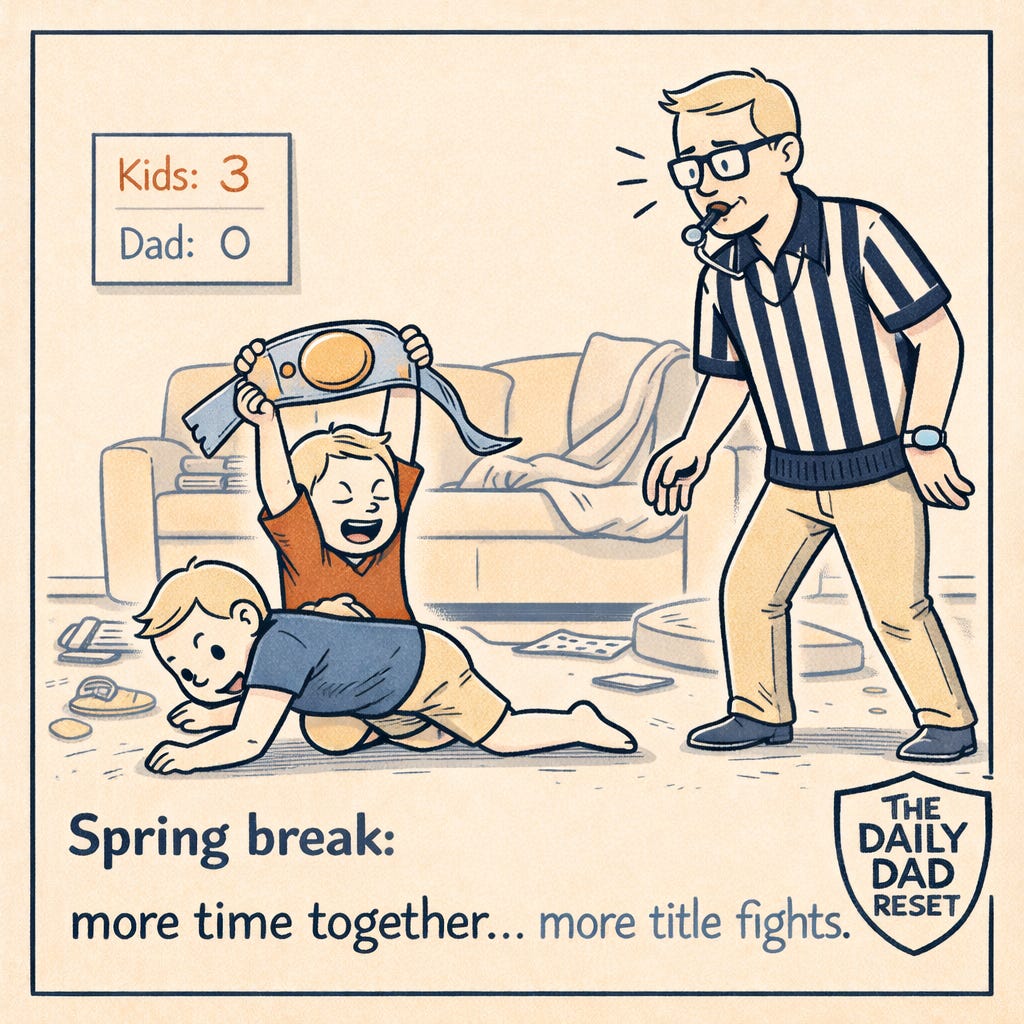
More WWE-style wrestling matches that somehow start over a blanket and end with someone claiming a championship belt.
More trampoline battles that were “just bouncing” until someone double-bounced someone else into orbit.
More opportunities for things to go sideways between brothers who were doing just fine… until they weren’t.
I refereed three matches before 10am… lost all three.
We plan things.
We try to limit screens.
We encourage them to go outside, build something, play something, do anything.
And for a while, it works.
They’re laughing. Running. Solving boredom like you hoped they would.
Then it doesn’t.
Because more time together doesn’t just create more fun.
It creates more friction.
More chances to compete.
More chances to misunderstand.
More chances for someone to say something just a little off… and now we’re in round two.
And lately, I’ve realized something:
It’s not always what they’re fighting about.
(It’s almost never about the original thing.)
It’s how they’re talking to each other while they do it.
The Real Struggle
This is the part most parents don’t say out loud.
You want your kids to get along.
You want the house to feel light.
You want to enjoy the break you helped create.
But instead, you find yourself stepping into the same arguments over and over again.
Same tone.
Same reactions.
Same frustration building in your chest.
And if you’re honest…
It’s not just them.
You can feel your own tone changing too.
Shorter.
Sharper.
Quicker to assume the worst.
(Which, to be fair, feels accurate when someone just got launched off the trampoline.)
Now everyone’s reacting.
No one’s really listening.
What We Started Noticing
We didn’t reduce the number of conflicts.
(There are still… a lot of “events.”)
We started paying attention to the language inside them.
Because most of what I was hearing sounded like this:
“You always…”
“He did it on purpose…”
“That’s not fair…”
And once those words showed up, everything escalated.
Fast.
Next thing you know, we’re not arguing about the blanket anymore… we’re arguing about respect, fairness, and who apparently “started it in 2019.”
At that point, someone’s already holding an imaginary championship belt.
So instead of trying to stop every argument, we started interrupting the language.
The Shift
We introduced three simple changes.
Not perfectly. Not consistently.
But enough to start changing the tone in our house.
1. Ask Before You Assume
Instead of:
“He did that on purpose.”
We practiced:
“Did you mean to do that?”
It sounds small.
But it slows the moment down just enough to create space.
2. Say It Like They’re a Good Kid
Instead of:
“You’re being annoying.”
We coached:
“I don’t like that. Can you stop?”
Same message.
Different impact.
(Less gasoline. Fewer title fights.)
3. Talk about What You Felt
This is the one we come back to the most.
No one knows when you get upset and what it is about unless you get clear.
We taught:
“I got frustrated when you said that because it made me think you weren’t listening.”
This doesn’t judge the other person.
But it does say how you felt and what made you feel that way.
Which, surprisingly, is a lot easier to hear than a verbal clothesline.
What Changed
Not everything.
They still argue.
They still get frustrated.
They still need reminders.
So do I.
But the tone is different.
And tone changes everything.
Arguments don’t last as long.
Recovery happens faster.
And moments that used to spiral… don’t.
I also started paying attention to the small wins.
When they asked a better question.
When they caught themselves.
When they even tried.
I called it out.
And wouldn’t you know it… they started doing it more.
I started catching myself more too.
Which helped level the whole thing out.
Less “you guys need to fix this.”
More “none of us are great at this yet.”
We also added one simple move that helped more than I expected:
The do-over.
If they said something the wrong way, they could stop, reset, and try again.
No lecture. No dragging it out.
Just a better rep.
(Man… that one helped me a lot too.)
A Better Way
James 1:19 says:
“Be quick to listen, slow to speak and slow to become angry.”
That’s not just good advice.
It’s a pattern.
One that’s a lot harder to live out in the middle of a trampoline battle or a third straight argument before lunch.
But when we actually practice it—
listening first,
holding our words,
slowing our reaction—
it changes the direction of the moment.
Why It Works
Language is rarely neutral.
It either adds fuel… or it creates space.
When we ask questions, we invite curiosity instead of conflict.
“Did you mean to do that?” lands very differently than “Why would you do that?”
One opens the door.
The other puts someone on defense.
The same goes for I statements.
“I felt frustrated when that happened” doesn’t point a finger.
It tells the truth without attacking.
And when people don’t feel attacked, they don’t feel the need to defend.
That’s where things start to change.
Not because we controlled the outcome.
But because we created just enough safety for something better to happen.
(Usually before someone grabs the belt again.)
Reset This Week
Introduce one new language rule.
Just one.
Something simple like:
“Ask before you assume”
“Say it without attacking”
“Use an I statement first”
Then work like hell to model it.
Catch it when you do it.
Catch it when they do it.
And when someone even tries it?
Celebrate it to the moon and back.
Because what you notice… grows.
And what you celebrate… sticks.
Watch what happens over time.
The same explosive conflicts that used to escalate faster than a Willie Wonka elevator… start slowing down.
Not disappearing.
But shifting.
Less explosion.
More recovery.
More second chances.
And a whole lot fewer championship belts being handed out.
And most of us aren’t choosing it.
We’re defaulting.
This week… reset it.
Love the rephrasing
NVC? :-)