


The Best Coaches Keep Kids Coming Back — Part 5
Let’s start with defining what a dad coach is.
A dad coach is someone trying to be a good dad and a good coach at the same time.
Most of us got into this because we love our kids.
We love baseball. We love summer nights. We love helping kids grow.
And somewhere along the way, many of us realize:
this was never really just about baseball.
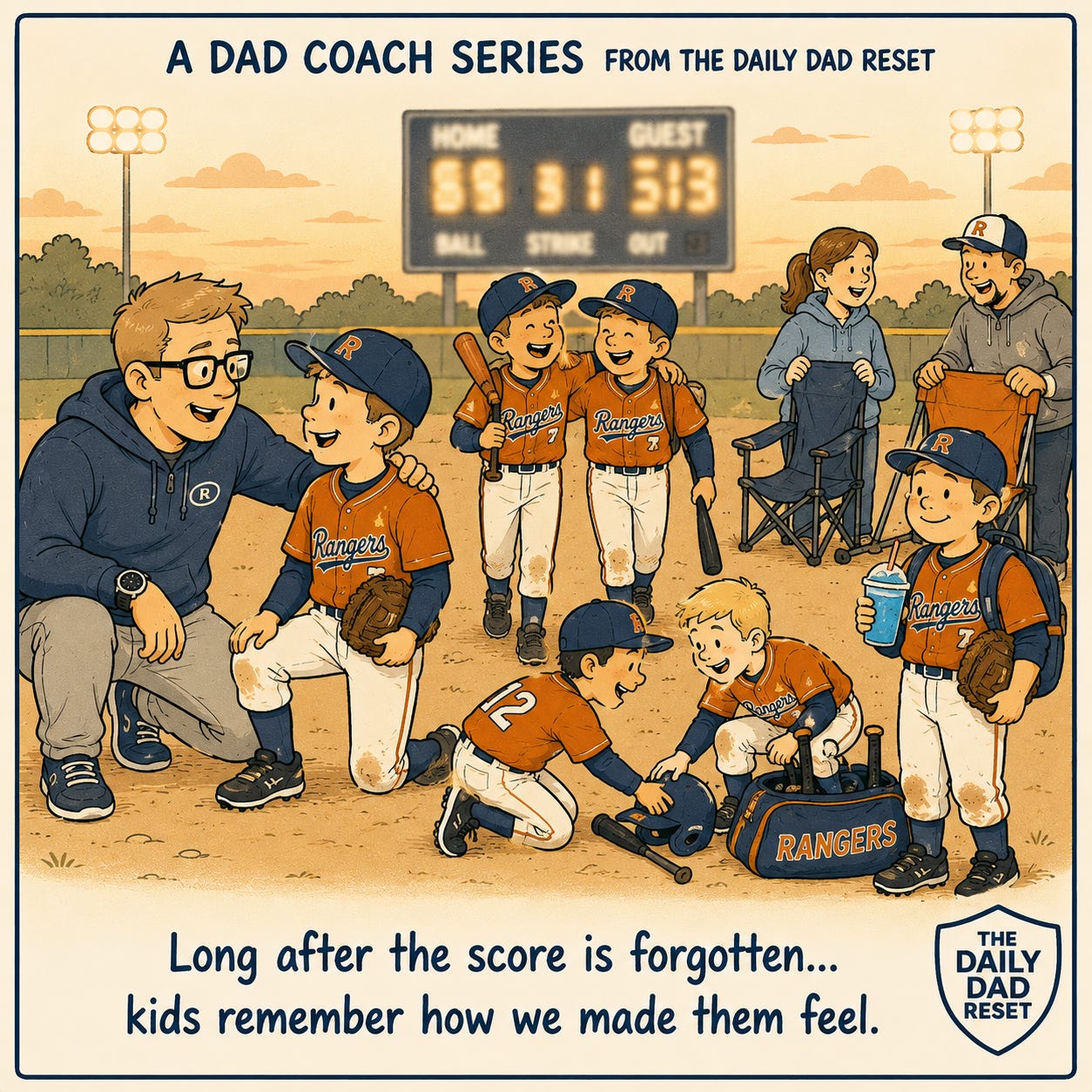
Because long after the scores are forgotten…
kids remember how it felt to play.
I started this series before baseball season as a reminder of the kind of dad coach I wanted to be before the first bad call, frustrating inning, or emotional meltdown tested all of it.
As the season went on, I found myself rereading these articles.
Sometimes for encouragement.
Sometimes because I needed the reminder.
And if I’m being honest, there were games where I lived up to what I wrote—and others where I didn’t.
Now, knee-deep in the playoffs, I can look across two teams and see kids having fun.
They’re good teammates.
They work hard.
They take risks.
They make mistakes.
And they recover.
Parents have bought in too.
One running joke this season has been that I might get thrown out of a game…
not for arguing, but for being relentlessly positive.
Ridiculous, but one game it almost happened. Afterward, laughing about it, I realized something:
The season wasn’t perfect.
Neither was I.
But many of the things I hoped for back in March actually happened. And none of them had anything to do with wins or standings. I kept thinking about different moments:
A kid bouncing back after a rough inning.
A teammate encouraging another player.
Kids laughing in the dugout.
Parents cheering for children who weren’t their own.
The confidence that slowly appeared in kids who didn’t have much of it in April. The best moments rarely showed up in the scorebook. Nobody tracks resilience. There isn’t a column for confidence. And nobody measures how often a kid leaves the field feeling supported and excited to come back.
But those things matter.
They might matter most.
Truth
Because years from now, most of these kids won’t remember many scores. They won’t remember league standings. Just like I don’t remember most of mine. But they’ll remember how the game felt.
The coaches.
The teammates.
The pressure.
The freedom.
The fun.
And whether baseball felt like something they got to do…
or something they had to survive.
That’s why this series was never really about baseball. Baseball was just the classroom. The real lesson was always bigger.
How do we help kids handle mistakes?
How do we respond when things aren’t fair?
How do we stay steady when emotions rise?
How do we build confidence without removing accountability?
How do we help kids love something enough to keep coming back?
Those aren’t baseball questions. They’re life questions. And that’s what this series has always pointed toward.
Coaching yourself before coaching kids.
Protecting confidence after mistakes.
Refocusing after frustration.
Knowing when to be coach.
Knowing when to be dad.
None of those things guarantee wins.
But they create something more important:
an environment where kids can grow.
Why It Matters
Kids play better when they feel emotionally safe. More importantly, emotionally safe kids usually become healthier adults. When kids learn:
that mistakes aren’t identity,
that failure isn’t rejection,
that frustration can be regulated,
and that connection doesn’t disappear after a rough day,
it changes more than baseball.
It changes how they respond to setbacks.
How they lead.
How they parent someday.
That’s why dad coaches matter.
Not because they’re perfect.
But because kids borrow emotional patterns from the adults closest to them.
And whether we realize it or not…
we’re teaching something much bigger than sports.
Reset
So maybe the real goal was never perfect baseball. Maybe it was:
kids who still love the game.
Kids who feel safe making mistakes.
Kids who know effort matters.
Kids who learn resilience.
Kids who become great teammates.
Kids who still want to tell you about their day after a rough game.
And maybe being a great dad coach simply means remembering:
Someday there will be a last game.
A last practice.
A last ride home.
And when that day comes, I don’t think any of us will wish we had talked more about batting mechanics. We’ll be grateful for the relationship we built along the way.
Because long after the scores are forgotten…
kids remember how we made them feel.
One Last Thing
Over the past few months, I’ve pulled together the biggest lessons from this series into a free guide:
The Dad Coach Reset Guide
Five simple shifts to help kids stay confident, connected, and coming back.
I’ll share it later this week.
I kept thinking about your point that baseball is the classroom, Jeremy. Looking back, I remember very little about the games I played, but I remember the adults who made me want to come back the next day.
I remember the game when I made the final out. I worried about that moment any time we were losing late. I remember how badly I felt at first, but I also remember my parents taking me to meet my teammates at the Dairy Hut for ice cream, just like we did after all the other games.