


This Fieldwork comes directly from this week’s article on why most January resolutions don’t last, read more about it below…

The takeaway wasn’t that we need better habits.
It was that we need to make a mindset shift, one that helps our resets survive past the first few weeks of January.
Most resets fail not because of discipline, but because of autopilot…
the quiet self-talk that kicks in before we snack, snap, scroll, or quit.
This Fieldwork isn’t about eliminating negative self-talk.
It’s about using it as a signal…
the exact moment where most resolutions quietly fall apart or quietly change.
And this matters not just for us…
but for our kids.
Because more often than we realize,
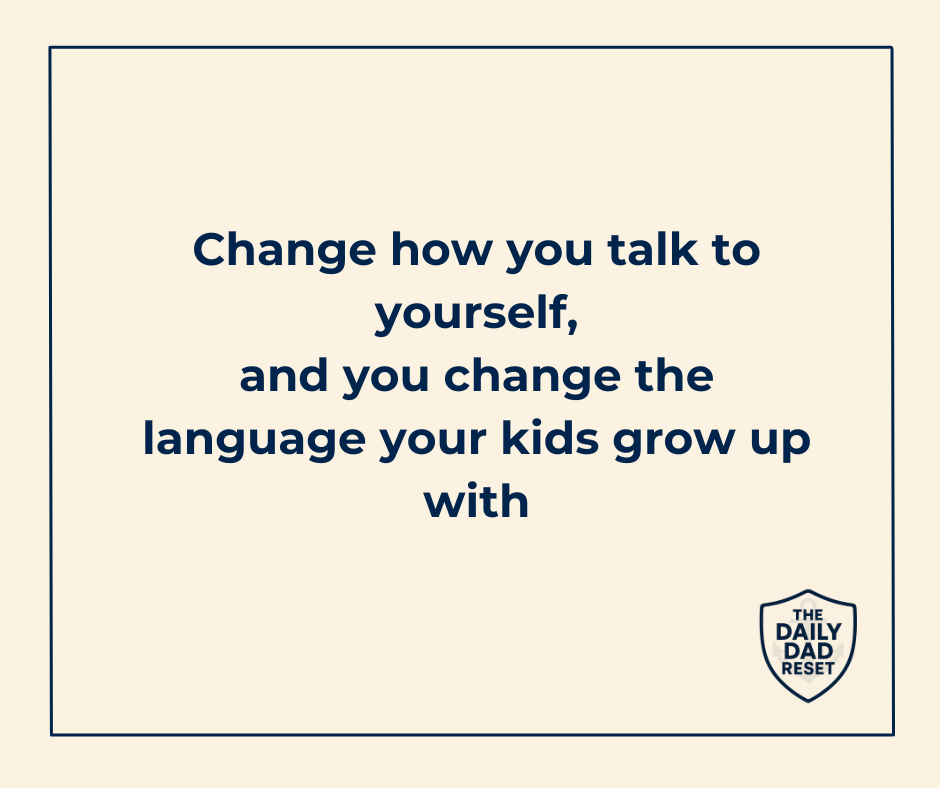
the way we talk to ourselves becomes the language they grow up with.
They don’t just hear our words to them.
They absorb the tone, grace, and pressure we use on ourselves.
This Week’s Fieldwork
1. Notice the phrase.
When negative self-talk shows up, pause and name it.
No fixing. No arguing. Just notice.
This is the moment most habits quietly fall apart, or quietly change.
2. Pair it with a micro-blessing.
Answer the thought with one short, grounding truth:
“I’m failing.” → “I’m learning.”
“I should be better by now.” → “Growth takes time.”
“I always mess this up.” → “One moment isn’t the whole story.”
“What’s the point?” → “Small reps still count.”
You’re not pretending everything is fine.
You’re telling yourself the fuller truth.
3. Say it once. Move on.
This isn’t a mindset overhaul — it’s a redirect.
One sentence. One breath. Back to the moment.
Why This Works (For You and Your Kids)
Negative self-talk usually shows up before behavior breaks down.
By noticing the thought and responding with a micro-blessing, you interrupt you our distorted through pattern without piling on shame.
Over time, your nervous system learns:
Stress doesn’t mean failure
Slips don’t require quitting
Effort doesn’t have to come with punishment
Distorted thoughts aren’t t the whole story
And here’s the deeper layer:
When your kids hear you respond to frustration with grace instead of self-attack, they learn a different script for themselves.
Not perfection.
Not pressure.
But compassion paired with responsibility.
That’s how habits last.
And that’s how your voice becomes one your kids can carry forward.
Closing Reminder
You don’t need to stop the thought to reset.
You just need to notice it…
and answer it with grace.
That’s where real habits stick.
This hit home. The idea that the reset moment is the thought before the action feels so true. I love the shift from trying to silence the voice to answering it with something steadier. That feels sustainable, and honestly, teachable. The reminder that our kids absorb how we talk to ourselves might be the most important part of all. Grace plus responsibility is a powerful combination.