


This post is the fourth in a series exploring the wonderful, chaotic, occasionally humbling world of being a dad and coaching youth sports. This series is less about elite drills, perfect mechanics, and turning nine-year-olds into MLB prospects… and more about helping kids love the game they’re playing. If you care not only about wins, but also kids having fun, building confidence, getting better, and wanting to come back next season, this series is for you. So far we’ve explored:
Let’s start with defining what a dad coach is.
A dad coach is someone trying to be a good dad and a good coach at the same time.
Because the truth is…
you know your own kid deeper than anyone else on that field.
You know when confidence is slipping.
You know when frustration is building.
You know when they need support.
And you know when baseball is starting to feel heavy.
There are moments kids need dad coach.
Moments to teach.
Correct.
Challenge.
Support.
But there are other moments when they just need dad.
And those are the moments this Fieldwork is about.
If you read this week’s article, you already know the moment.
The game ends.
Everybody piles into the car.
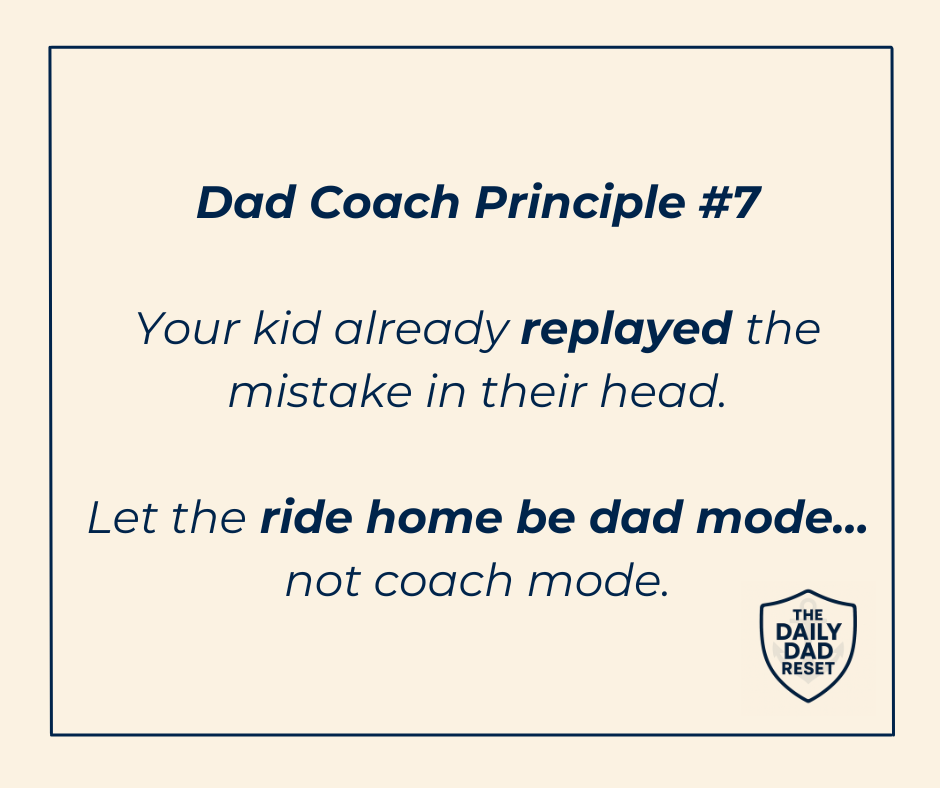
And before you even leave the parking lot, your brain starts preparing the postgame speech.
The missed ground ball.
The strikeout.
The baserunning mistake.
The “teachable moment.”
Meanwhile your kid is in the backseat emotionally exhausted, covered in dirt, and just hoping the ride home still feels safe.
That’s why we made a rule in our car:
If my hat is on, I’m coach.
If my hat is off, I’m dad.
And honestly?
Most of the time the hat ends up on the dashboard before we even leave the field.
Because sometimes your kid needs dad more than coach.
Your Fieldwork This Week
This week, try becoming more intentional about the emotional tone of the ride home.
Not the mechanics.
Not the analysis.
The feeling.
1. Pause Before the Breakdown
When your kid gets in the car, don’t immediately launch into coaching.
Pause first.
Let everybody breathe. Sometimes the best thing you can do after a rough game…
is not turn the car into a moving postgame interview.
2. Ask Who They Need
Try asking:
“Who do you want riding home right now?
Dad or coach?”
You might be surprised by the answer.
Sometimes kids want to process the game.
Sometimes they want feedback.
But a lot of the time?
They just want dad.
3. Protect the Ride Home
If they ask for dad....
Grab food. Play music. Laugh. Talk about literally anything else for a little while.
Because emotional safety matters.
And kids don’t just remember the game.
They remember how it felt being with us after it.
If they ask for coach....
Give them some balanced feedback with equal parts praise and areas to improve and then shift into dad mode.
Why It Matters
After games, kids are often emotionally flooded.
Especially after mistakes, embarrassment, pressure, or disappointment.
And when emotions are elevated, long coaching speeches usually create more heaviness…
not more confidence.
That’s why the emotional tone of the ride home matters so much.
When kids feel emotionally safe:
they recover faster
stay more confident
become more coachable later
and separate mistakes from identity
Connection first.
Coaching later.
That’s the reset.
Closing Thought
Jeremy, you have a real talent for breaking down emotionally complex moments into clear, actionable steps that help parents support their kids in healthy ways.