


There’s a special kind of transformation that happens to dads during baseball season.
Somewhere between the third questionable strike call and the third inning snack bag…
we slowly evolve from “supportive volunteer coach”
into a part-time appellate court judge with a sunflower seed addiction.
A dad coach is basically:
1 part baseball coach
1 part life coach
1 part equipment manager
and 7 parts trying not to say something dramatic loud enough for the entire dugout to repeat later.
The dangerous thing about frustration is how quickly the brain starts casting roles.
Hero.
Villain.
Good guy.
Bad call.
And once the villain takes center stage…
we usually stop coaching the next hero moment (read more about it here).
You could feel it happen. The strike zone became the center of the game. The umpire became the main character. And suddenly the dugout stopped focusing on baseball. One kid started arguing the calls exactly like the coach. Another stopped paying attention completely. One was staring at airplanes.
Another let a ground ball slowly roll past him while the entire dugout held a courtroom hearing over Ball Four.
The emotional spotlight shifted.
And the kids followed it.
Your Fieldwork This Week
1. Catch the moment the villain appears
Most of the time, you can feel it before you hear it. The body tightens. The tone changes. The running commentary begins.
“That’s terrible.”
“Come on blue.”
“That’s two now.”
Notice the moment your brain stops watching the game and starts building a case. Because once the villain becomes “the problem,” your attention naturally starts collecting evidence. And once you cast yourself as the hero trying to “protect the team”…
it becomes really easy to stay emotionally hooked to the frustration.
2. Shift the emotional spotlight back to the hero
Ask yourself: Who actually needs my attention right now?
The batter stepping into the box? The pitcher trying to recover? The kid in right field slowly building confidence?
Not the umpire. Not the frustration. Not the unfairness.
The kids. The emotional spotlight always teaches something.
If the umpire becomes the villain, the dugout eventually starts acting like it’s under attack.
But if effort,
recovery,
and encouragement become the heroes…
kids usually start chasing those instead.
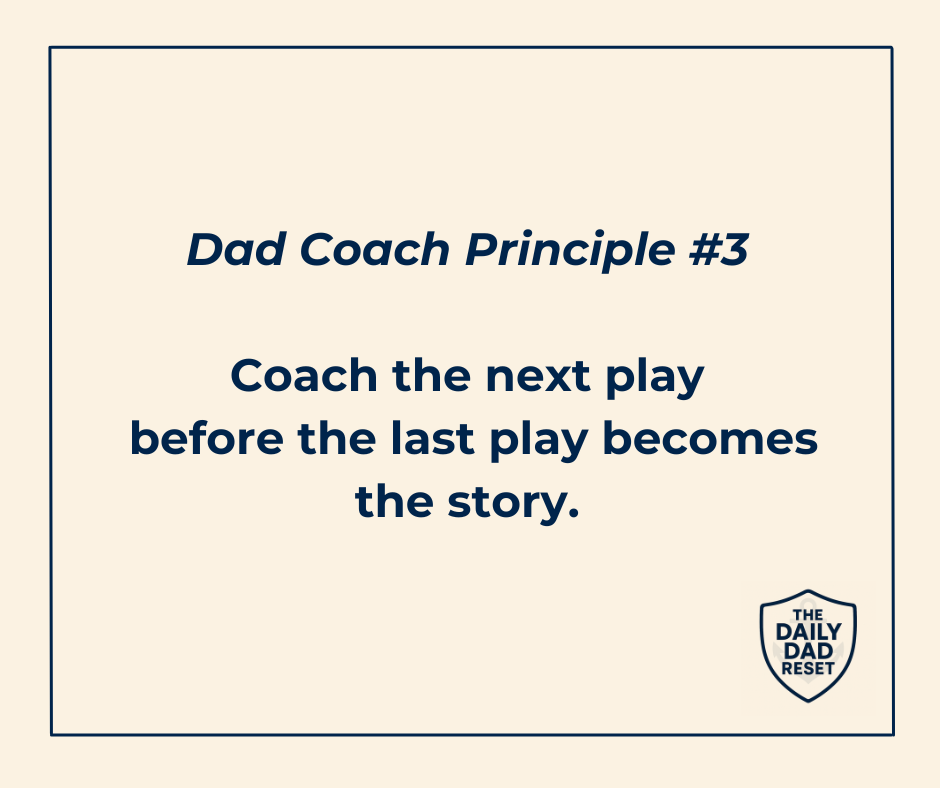
3. Coach the next hero moment
Give the dugout something healthier to repeat.
A cue. A laugh. A reset. A quick word of encouragement. Point out effort. Celebrate recovery. Find a kid doing something right and make that the center of attention.
A hustle play.
A reset after a mistake.
A teammate encouraging another teammate.
Make that the story the dugout starts repeating. Because youth sports move fast.
And the longer the villain story hangs in the air, the more the whole team starts breathing it in.
Why It Matters
Kids are constantly learning what deserves emotional attention.
Not just from what we say.
From what we react to.
And the hard part is…
our brains actually like villain stories.
They make us feel justified. They make us feel alert. Sometimes they even make us feel heroic. Like we’re defending fairness. Protecting the kids. Standing up for what’s right.
But once the umpire becomes “the problem,” every missed call suddenly feels personal. Every frustration confirms the story. And before long, the emotional climate of the dugout changes.
Not because kids fully understand baseball.
But because kids are incredibly good at reading emotional focus. They can tell what matters most by watching what adults react to. The frustration becomes contagious.
And the hero/villain story spreads faster than the actual coaching does.
That’s true in parenting too. Sometimes one frustrating behavior, one stressful moment, one conflict, one bad attitude starts swallowing the entire night. And we stop seeing everything else that’s
still good,
still growing,
still worth leading.
Sometimes the strongest leadership move is simply choosing a better hero.
The kid who reset after striking out.
The teammate encouraging another teammate.
The child slowly building confidence.
The moment of growth hiding underneath the frustration. Because whatever gets the emotional spotlight…
usually becomes the story everyone else starts repeating.
Reset Reminder:
Not every frustration needs a villain.
Sometimes the strongest leadership move is refusing to let the wrong thing become the center of the story
Wonderful piece, really well observed and made me smile. In Britain we have different sports, but exactly the same problem Dads!
Excellent words here