


This post is the first of a series that explores the wonderful world of being a dad and coaching sports. This is less about amazing drills that will maximize winning and more about helping kids love the sport you are coaching. If you are interested in measuring the success of the season by not only wins but also kids having fun, getting better, and wanting to play again next season, this series is for you.
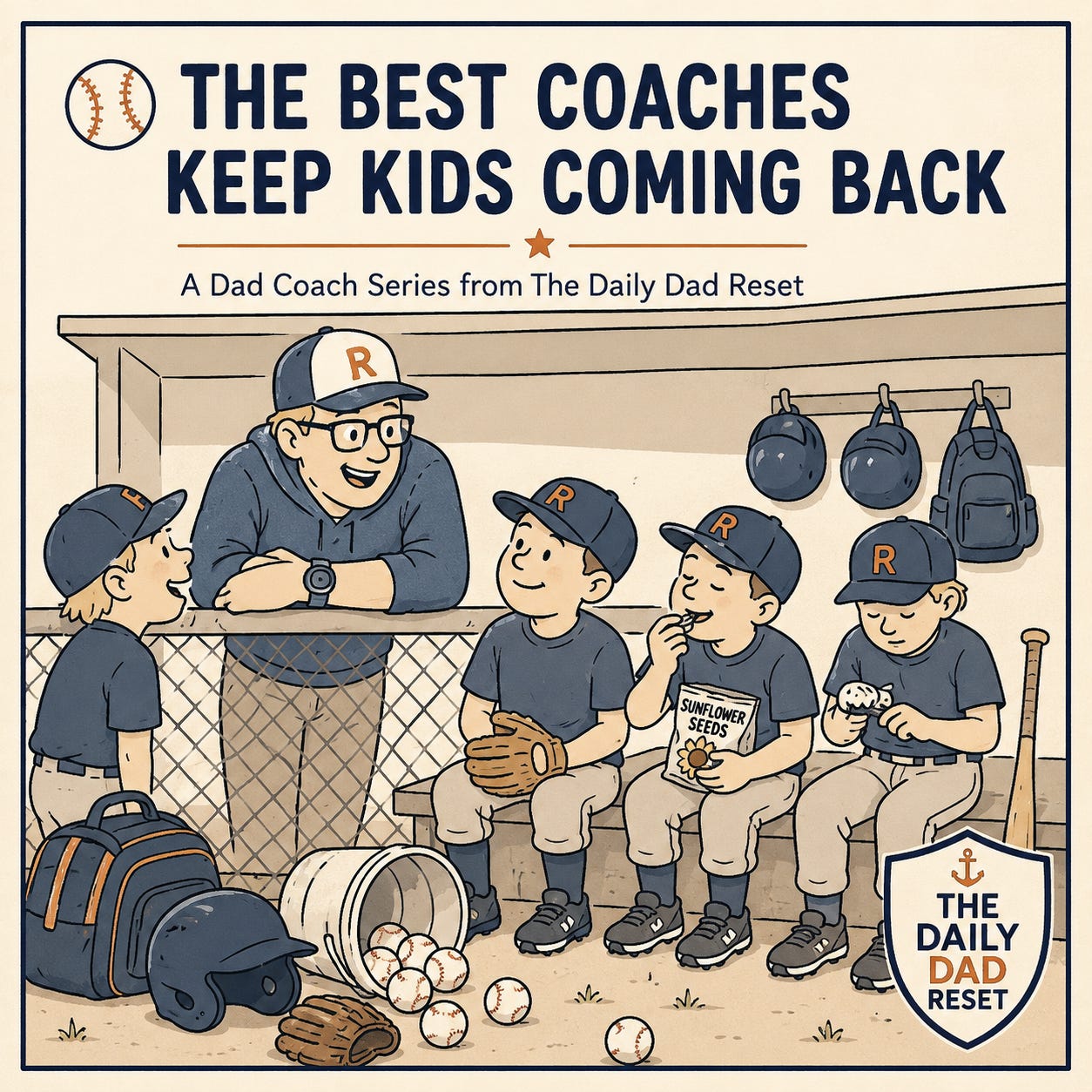
Let’s start with defining what a dad coach is.
Not the guy trying to make sure his kid always plays shortstop.
Not the coach treating a Tuesday night little league game like Game 7 of the World Series.
A dad coach is someone trying to be a good dad and a good coach at the same time.
Someone who wants kids to:
improve
compete
build confidence
learn resilience
and still have fun playing baseball
All kids. Especially their own. Because deep down, the real win isn’t just better players.
It’s kids who still love the game.
And kids, especially your own, hoping you coach again next season.
Opening Story
It was early in the season.
Cold enough that every kid wanted batting gloves on between drills. Parents wrapped in blankets like we were watching baseball in Antarctica.
I was running infield.
Ground ball.
Missed it.
Again.
The same kid.
And if you’ve coached little league long enough, you know the internal spiral starts fast.
You begin as “encouraging coach.” Then suddenly you’re giving a TED Talk on fielding mechanics to a nine-year-old who still eats ketchup sandwiches.
“Come on buddy, get in front of it.”
“Stay down.”
“Watch the ball.”
Helpful coaching.
At least that’s what I told myself.
But the more I corrected him, the worse he got. His shoulders tightened. His feet slowed down. His eyes started panicking before the ball was even hit.
Then another kid made an error.
And another.
And suddenly the whole practice felt heavy.
Not competitive.
Heavy.
The kind of heavy where kids stop talking and coaches start overexplaining.
I could feel myself speeding up—talking more, correcting more, trying harder.
Which, ironically, was making everything worse.
That’s when I realized something.
Kids don’t just hear coaching.
They absorb environments.
Insight
Most coaches start with good intentions.
We really do.
We want to help. Teach. Build confidence. Help kids improve.
And we should.
Kids need coaching. They need standards. They need accountability. They need adults who push them. Competition is good. Learning how to handle pressure is good.
This isn’t about lowering standards.
It’s about how we carry them.
Because somewhere along the way, coaching can quietly become constant correction, frustration, pressure, and avoiding mistakes. Sometimes we start trying to turn nine-year-olds into MLB prospects before they can consistently remember where they left their water bottle.
And kids feel that shift immediately.
Especially the sensitive ones,
the anxious ones.
and the kids who desperately want your approval.
The best coaches understand something important:
You can be both.
Fun and competitive.
Structured and encouraging.
Demanding and safe.
Increasing fun doesn’t mean you stop caring about winning. It means you understand what actually helps kids improve long term.
Good coaches help kids feel safe.
Great coaches help kids have fun AND get better through support and accountability.
The difference is often tone, facial expressions, body language, timing, and knowing when a kid needs pushing… and when they need belief.
Because fun is not the enemy of development.
It’s the doorway to it.
Kids stay where they feel:
safe
encouraged
connected
believed in
That’s why the best teams aren’t always the ones that win the most.
They’re the ones kids want to come back to.
The ones where kids leave practice sweaty, laughing, dirty, and already asking if there’s a game tomorrow.
Why It Works
When kids feel embarrassed, afraid of mistakes, or constantly under pressure, their brain shifts from learning mode into survival mode.
Fight.
Flight.
Freeze.
You can actually watch it happen in youth sports.
One kid gets angry.
One starts avoiding the ball.
One completely shuts down.
And for a lot of kids, mistakes don’t just feel like mistakes.
They feel like threat.
Like embarrassment.
Like shame.
The Compass of Shame shows up in dugouts more than most adults realize.
And the wild part?
Most coaches don’t even realize they’re helping trigger it. Not because they’re bad coaches. Because they’re dysregulated. Their frustration speeds up. Their tone sharpens. Their face tightens. Their body language changes. And suddenly a kid who was trying to learn baseball…
is now trying to survive embarrassment. That’s why regulation matters so much.
The way we talk.
The way we look.
The way we act.
All of it affects whether a kid stays in survival mode… or comes out of it. We can become the reason they stay stuck there. Or the reason they feel safe enough to take risks again. Because when kids are not in survival mode, they laugh more, try more, recover faster, take coaching better, and honestly…
play better.
The best coaches know how to bring energy without bringing threat. They know how to challenge kids without making them feel unsafe. That balance changes everything. Because confidence develops best when challenge and support exist together.
Not pressure by itself. Support. Because long after they forget the score…
they’ll remember how playing for you felt.
And honestly?
Most kids would rather strike out with a coach they trust than play perfectly for one that makes them miserable.
Reset This Week
At your next practice or game…
watch the dugout more than the scoreboard.
Notice:
who shuts down after mistakes
who needs encouragement
who changes when pressure rises
who’s currently eating sunflower seeds like it’s their full-time job
And before you correct something…
regulate yourself first.
Lower your tone.
Slow your pace.
Relax your face.
Actually be calm.
Not pretend calm.
Then challenge a kid and encourage them in the same moment.
“Good. I know you can do this. Let’s try it again.”
Because the goal isn’t just better players.
It’s kids who still love the game.
Man… this is one of the most important things a dad coach can understand.
Kids absolutely absorb the emotional environment around them. You can literally watch confidence shrink or grow depending on the tone, body language, and pressure coming from adults.
“Fun and competitive. Structured and encouraging. Demanding and safe.” That part especially hit me.
A lot of kids won’t remember the score years later, but they will remember how playing for you felt. Incredible piece, Jeremy.
Love this.
The line “Kids don’t just hear coaching. They absorb environments” stopped me cold because it’s the same in climbing, baseball, or any sport where a kid’s eyes are on you before everything else.
That “heavy” practice you described? We’ve all been there, and the worst part is realizing we dropped the weight on them, not the other way around.
Great work!